



PLK2
PLK2 is an evolutionarily conserved serine/threonine kinase with an N-terminal kinase domain and C-terminal polo-box domain[1]. Mechanistically, PLK2 supports mitotic centriole replication, neural homeostasis, and synaptic plasticity[1][2]. In centrosome biology, PLK2 localizes to centrosomes near the G1/S transition, and its polo-box domain enables centrosomal association and centriole duplication[2]. In neurons, PLK2 regulates α-synuclein turnover by phosphorylating α-synuclein at S129 and promoting selective autophagic degradation[3]. In disease models, PLK2 overexpression reduced α-synuclein accumulation, dopaminergic neurodegeneration, and motor impairment in a rat Parkinson disease model[3]. However, PLK2 deletion reduced presynaptic α-synuclein S129 phosphorylation but did not reduce Lewy body phosphorylation, separating physiological phosphorylation from aggregate pathology[4]. Compared with related isoforms, PLK3 can also catalyze α-synuclein phosphorylation and degradation, while PLK1 and PLK4 remain the dominant inhibitor-focused cancer targets[5][6]. For experimental applications, PLK2 inhibition suppressed LPS-induced microglial proinflammatory signaling through the HSP90α/IKKβ/NF-κB pathway[7].
Références:
- [1]. Zhang C, et al. Polo-Like Kinase 2: From Principle to Practice. Front Oncol. 2022 Jul 8;12:956225. [Content Brief]
- [2]. Cizmecioglu O, et al. Plk2 regulated centriole duplication is dependent on its localization to the centrioles and a functional polo-box domain. Cell Cycle. 2008 Nov 15;7(22):3548-55. [Content Brief]
- [3]. Oueslati A, et al. Polo-like kinase 2 regulates selective autophagic α-synuclein clearance and suppresses its toxicity in vivo. Proc Natl Acad Sci U S A. 2013 Oct 8;110(41):E3945-54. [Content Brief]
- [4]. Weston LJ, et al. Genetic deletion of Polo-like kinase 2 reduces alpha-synuclein serine-129 phosphorylation in presynaptic terminals but not Lewy bodies. J Biol Chem. 2021 Jan-Jun;296:100273. [Content Brief]
- [5]. Dahmene M, et al. Dissecting the Molecular Pathway Involved in PLK2 Kinase-mediated α-Synuclein-selective Autophagic Degradation. J Biol Chem. 2017 Mar 3;292(9):3919-3928. [Content Brief]
- [6]. Bian S, et al. Progress with polo-like kinase (PLK) inhibitors: a patent review (2018-present). Expert Opin Ther Pat. 2024 Sep;34(9):789-806. [Content Brief]
- [7]. Cheng J, et al. Polo-like kinase 2 promotes microglial activation via regulation of the HSP90α/IKKβ pathway. Cell Rep. 2024 Oct 22;43(10):114827. [Content Brief]
All Product Categories
-
PLK2 Produits associés (21)
Produits associés (21)

- 1
- 2
-
Volasertib
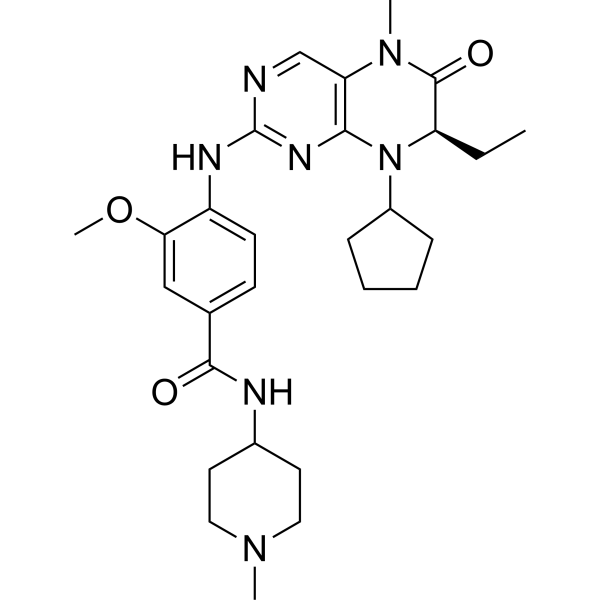
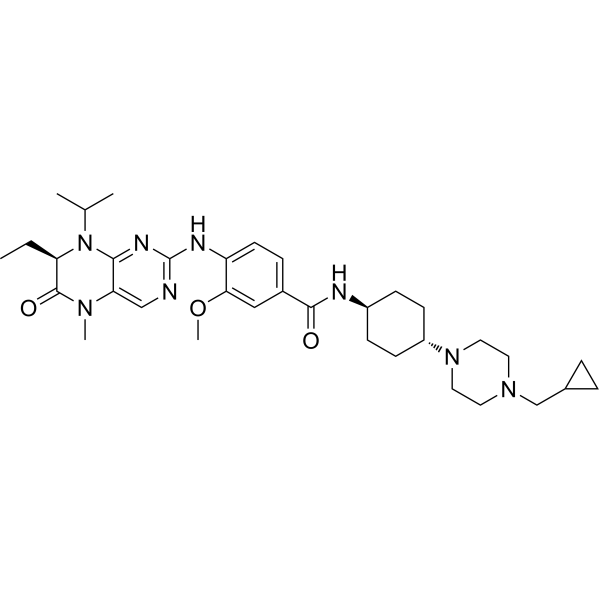 0 ImagesSynonyms: BI 6727Volasertib (BI 6727) is an orally active, highly potent and ATP-competitive Polo-like kinase 1 (PLK1) inhibitor with an IC50 of 0.87 nM. Volasertib inhibits PLK2 and PLK3 with IC50s of 5 and 56 nM, respectively. Volasertib induces mitotic arrest and apoptosis. Volasertib, a dihydropteridinone derivative, shows marked antitumor activity in multiple cancer models.
-
Rigosertib
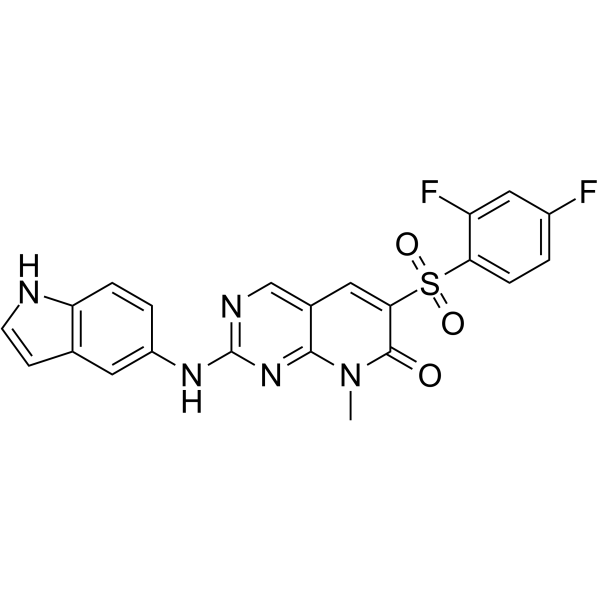
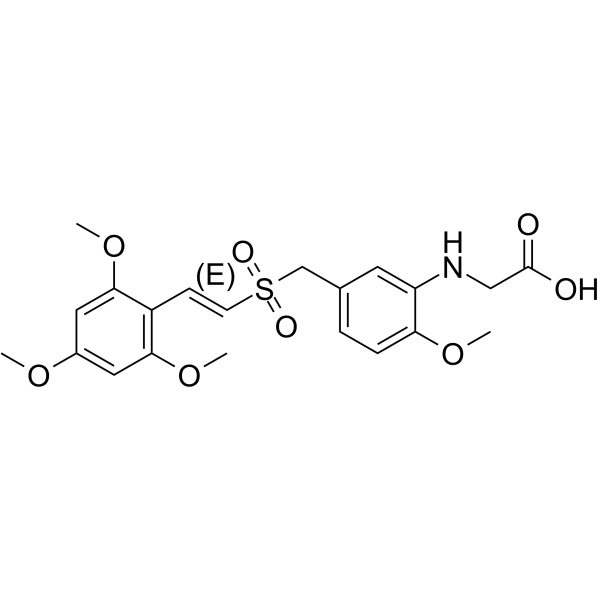 0 ImagesCat. No.: HY-12037ACAS No.: 592542-59-1Synonyms: ON-01910Rigosertib (ON-01910) is a multi-kinase inhibitor and a selective anti-cancer agent, which induces apoptosis by inhibition the PI3 kinase/Akt pathway, promots the phosphorylation of histone H2AX and induces G2/M arrest in cell cycle. Rigosertib is a selective and non-ATP-competitive inhibitor of PLK1 with an IC50 of 9 nM.
-
TAK-960
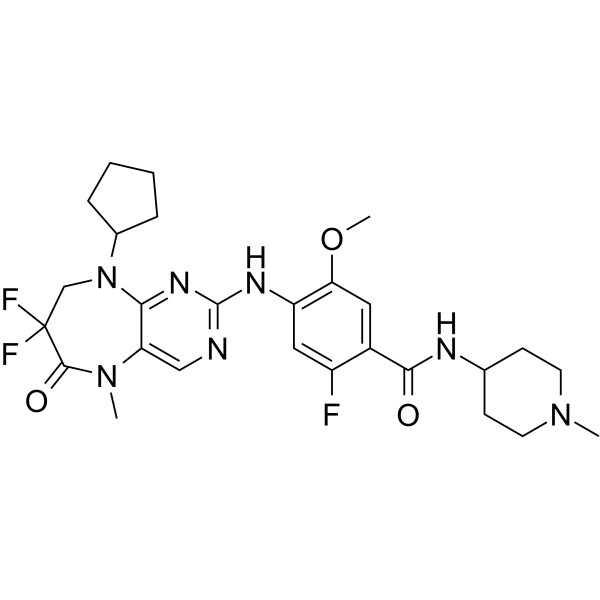 0 ImagesTAK-960 is an orally available, selective inhibitor of polo-like kinase 1 (PLK1), with an IC50 of 0.8 nM. TAK-960 also shows inhibitory activities against PLK2 and PLK3, with IC50s of 16.9 and 50.2 nM, respectively. TAK-960 inhibits proliferation of multiple cancer cell lines and exhibits significant efficacy against multiple tumor xenografts.
-
8012–3246
 0 Images8012-3246 is a selective PLK2 inhibitor with an IC50 of 774.5 nM. 8012-3246 suppresses GSK3β phosphorylation. 8012-3246 exhibits potent anticancer activity against colorectal cancer.
-
Poloppin II
 0 ImagesCat. No.: HY-125220CAS No.: 2248068-54-2Poloppin II is an orally active PBD inhibitor that blocks the binding of phosphopeptide substrates to PLK1/PLK2 PBD, with IC50 values of 41 µM and 105 µM for human PLK1/PLK2 PBD, respectively. Poloppin II binds to PLK4 PBD to inhibit PLK4-dependent mitotic functions. Poloppin II can be used in research on kras-mutant colorectal cancer.
-
YLT-11
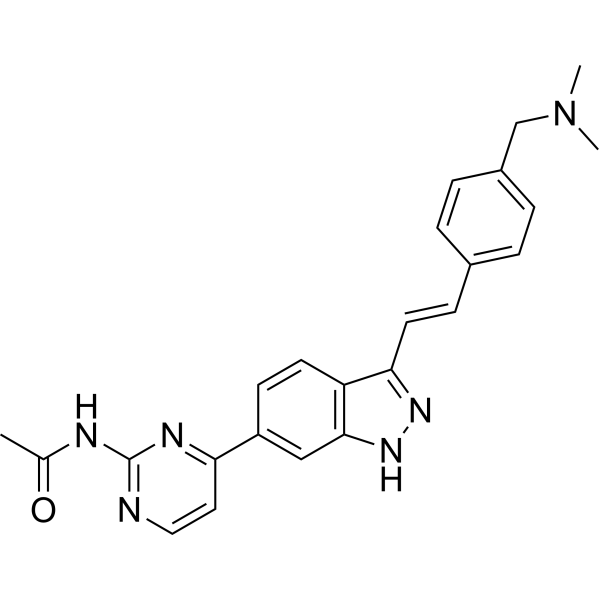 0 ImagesCat. No.: HY-115589CAS No.: 3040940-49-3
-
Rigosertib sodium
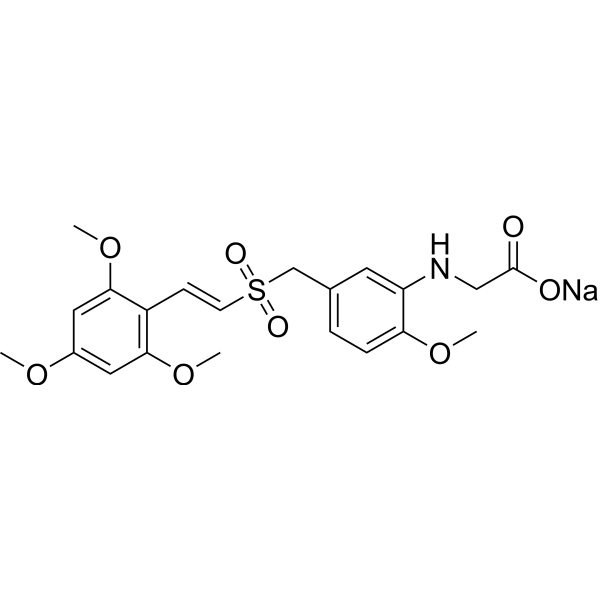 0 ImagesSynonyms: ON-01910 sodiumRigosertib sodium (ON-01910 sodium) is a multi-kinase inhibitor and a selective anti-cancer agent, which induces apoptosis by inhibition the PI3K/Akt pathway, promotes the phosphorylation of histone H2AX and induces G2/M arrest in cell cycle. Rigosertib sodium is a selective and non-ATP-competitive inhibitor of PLK1 with an IC50 of 9 nM.
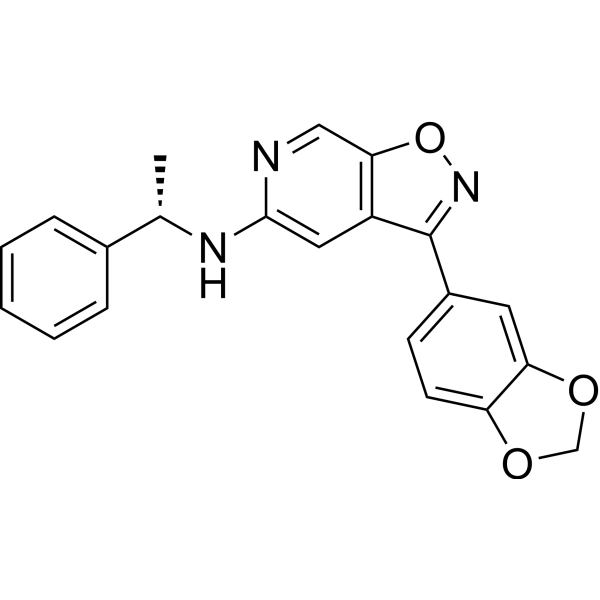
-
Poloxin
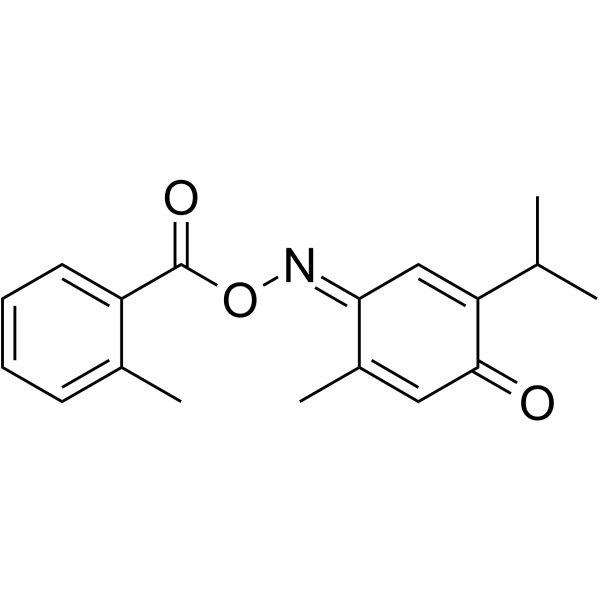 0 ImagesPoloxin is a non-ATP competitive Polo-like Kinase 1 (PLK1) inhibitor that targets the polo-box domain, with an IC50 of appr 4.8 μM.
-
Plogosertib
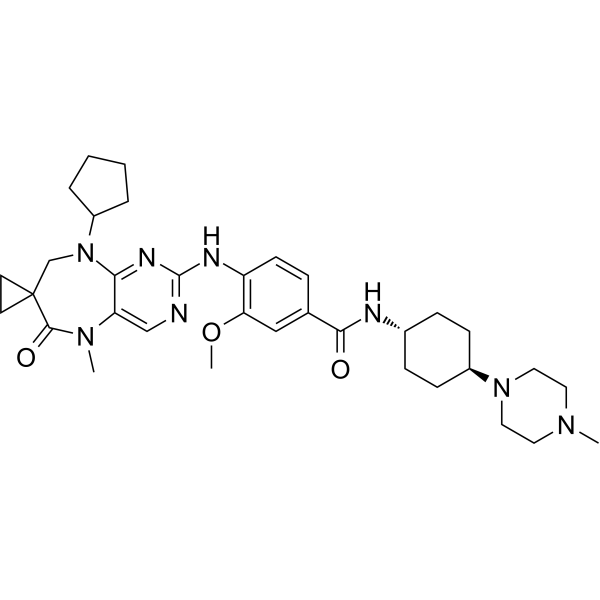 0 ImagesSynonyms: CYC140Plogosertib (CYC140) is a selective, potent, and orally active ATP-competitive PLK1 inhibitor (IC50: 3 nM). Plogosertib is an anti-cancer agent with anti-proliferative activity. Plogosertib can be used in the research of several tumors, including esophageal, gastric, leukemia, non–small cell lung cancer, ovarian, and squamous cell cancers.
-
Volasertib trihydrochloride
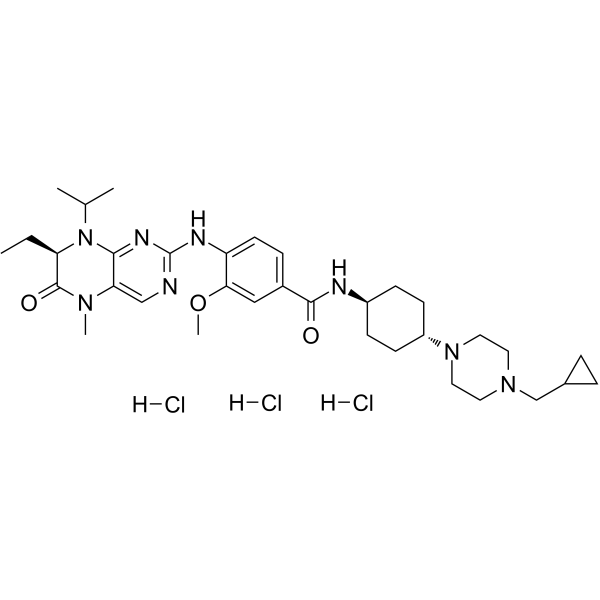 0 ImagesSynonyms: BI 6727 trihydrochlorideVolasertib (BI 6727) trihydrochloride is an orally active, highly potent and ATP-competitive Polo-like kinase 1 (PLK1) inhibitor with an IC50 of 0.87 nM. Volasertib trihydrochloride inhibits PLK2 and PLK3 with IC50s of 5 and 56 nM, respectively. Volasertib trihydrochloride induces mitotic arrest and apoptosis. Volasertib trihydrochloride, a dihydropteridinone derivative, shows marked antitumor activity in multiple cancer models.
-
PLK1-IN-13
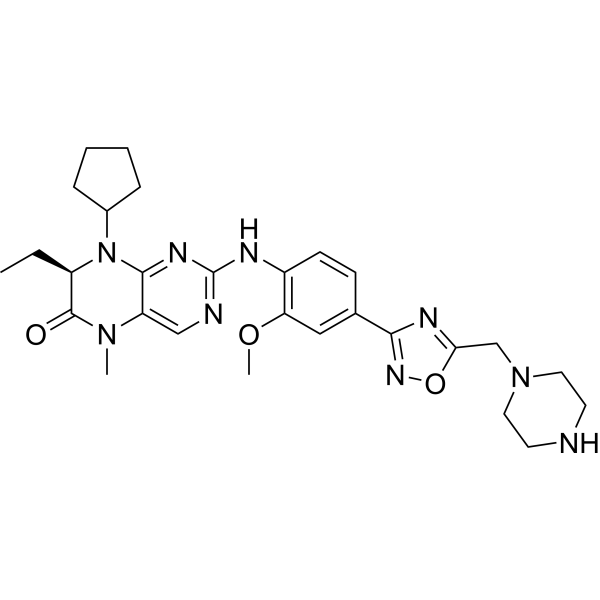
 0 ImagesPLK1-IN-13 is a selective and orally active PLK1 inhibitor (IC50: 0.27 nM). PLK1-IN-13 also inhibits PLK2 (IC50: 12.72 nM) and PLK3 (IC50: 4.12 nM). PLK1-IN-13 arrests cell at G2 phase, induces apoptosis and down-regulates the transcription of the proliferation-related oncogene c-MYC. PLK1-IN-13 inhibits tumor growth, and can be used for research of acute myeloid leukemia (AML).
-
TAK-960 dihydrochloride
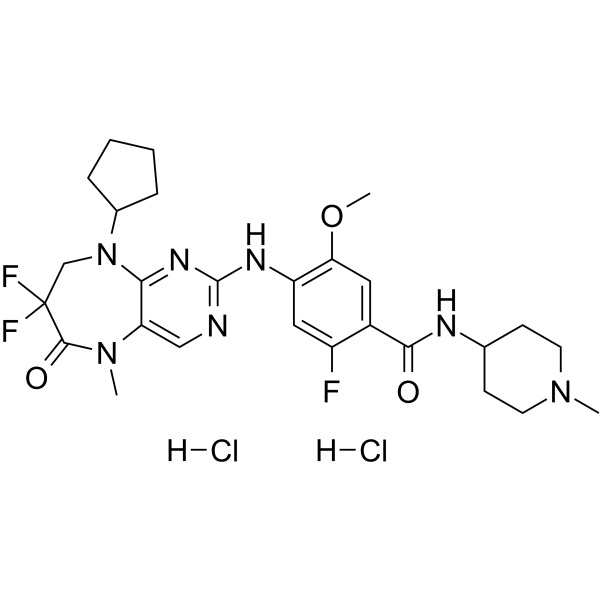 0 ImagesCat. No.: HY-15160BPureté: 99.15%TAK-960 dihydrochloride is an orally available, selective inhibitor of polo-like kinase 1 (PLK1), with an IC50 of 0.8 nM. TAK-960 dihydrochloride also shows inhibitory activities against PLK2 and PLK3, with IC50s of 16.9 and 50.2 nM, respectively. TAK-960 dihydrochloride inhibits proliferation of multiple cancer cell lines and exhibits significant efficacy against multiple tumor xenografts.
-
PLK1-IN-12
 0 ImagesCat. No.: HY-172364PLK1-IN-12 is a highly selective and orally active PLK1 inhibitor with an IC50 of 20 nM. PLK1-IN-12 shows more selective for PLK1 than PLK2 (IC50: >10000 nM) and PLK3 (IC50: 3953 nM). PLK1-IN-12 exhibits anticancer potency across a broad spectrum of cell lines. PLK1-IN-12 can be used in anti-leukemia research.
-
PLK2-IN-1
 0 ImagesCat. No.: HY-189637PLK2-IN-1 is a selective PLK2 inhibitor (IC50 0.78 μM). PLK2-IN-1 induces Apoptosis and cell cycle arrest, reduces AKT and mTOR phosphorylation, and decreases Cyclin E expression as well as downregulates the CDK2/Rb/E2F1 axis. PLK2-IN-1 inhibits tumor growth in colorectal cancer xenograft models. PLK2-IN-1 can be used for research on colorectal cancer.
-
PLK1-IN-16
 0 ImagesCat. No.: HY-181051CAS No.: 3068378-51-5PLK1-IN-16 is a selective polo-like kinase 1 (PLK1) inhibitor with an IC50 of 0.25 nM. PLK1-IN-16 exhibits lower inhibitory potency against PLK2 and PLK3, induces G2 phase cell cycle arrest, induces apoptosis, and exhibits antiproliferative activity against tumor cells. PLK1-IN-16 can be stable under simulated gastric acid environmental conditions, and acceptable CYP 450 inhibition. PLK1-IN-16 can be used for the study of triple-negative breast cancer (TNBC), breast cancer, leukemia.
-
BDE30671203
 0 ImagesCat. No.: HY-181030BDE30671203 is a highly selective PLK1 inhibitor (IC50 = 2.163 nM). BDE30671203 induces G2/M phase arrest and Apoptosis. BDE30671203 downregulates key cell cycle regulators (CDC20, CDK1) and the anti-apoptotic gene Bcl-2. BDE30671203 exhibits anticancer activity against non-small cell lung cancer, large cell lung cancer, and liver cancer.
- 1
- 2



